District Hunt 2026 · Eastern Market, Washington DC
The Guilded Gambit
On Saturday, October 17, twenty-four teams were recruited
into five guilds and sent out across Capitol Hill to take territory from each other. All of it is below, answers included.
24teams
103players
15games to play
12puzzles to solve
Five games in the hall and ten out in the
neighborhood. The puzzles were the ten verses that found the zones, the banner puzzle that
got teams recruited, and the one nobody was told about.
The premise
Five guilds, one market, and a contest that has run since 1873
Eastern Market opened in 1873, and for most of that first year the people
running it could not agree on how to fill the place, which is how the guilds started.
There were five leaders with completely different ideas. The first wanted an auction
environment with the chaos echoing throughout the neighborhood. The second wanted to position
the stalls around vendors like the candlemakers and bakers so smells could waft down the
street. The third was certain the whole business came down to relationships and providing
special discounts to return customers. The fourth focused on printing an event calendar so that
families could plan accordingly. The fifth wanted music and art filling the empty spaces to give
people a story to tell at home.
It went on for the better part of a year, and then, in the way of people who have run out of
argument, they formed a committee. The committee turned out to work. Each of the
five covered ground the other four did not, and between them they filled the market and kept it full.
The committee itself lasted only a few years. The rivalry outlived it by a century and a half,
because the people who had backed each of the five approaches went on keeping score against one
another long after there was anything official to keep score about. Eventually a neighborhood
puzzler grew tired of hearing about it and built something that would settle the question once
a year: five guilds, a map of Capitol Hill divided between them, and a day of games to decide
who held what. That is still the format.
Every guild sends a captain. Every new team gets claimed by whichever guild recognizes itself
in them, and whoever holds the most ground at the end of the day keeps the Gambit until the
following October, with the bragging rights that go with it.
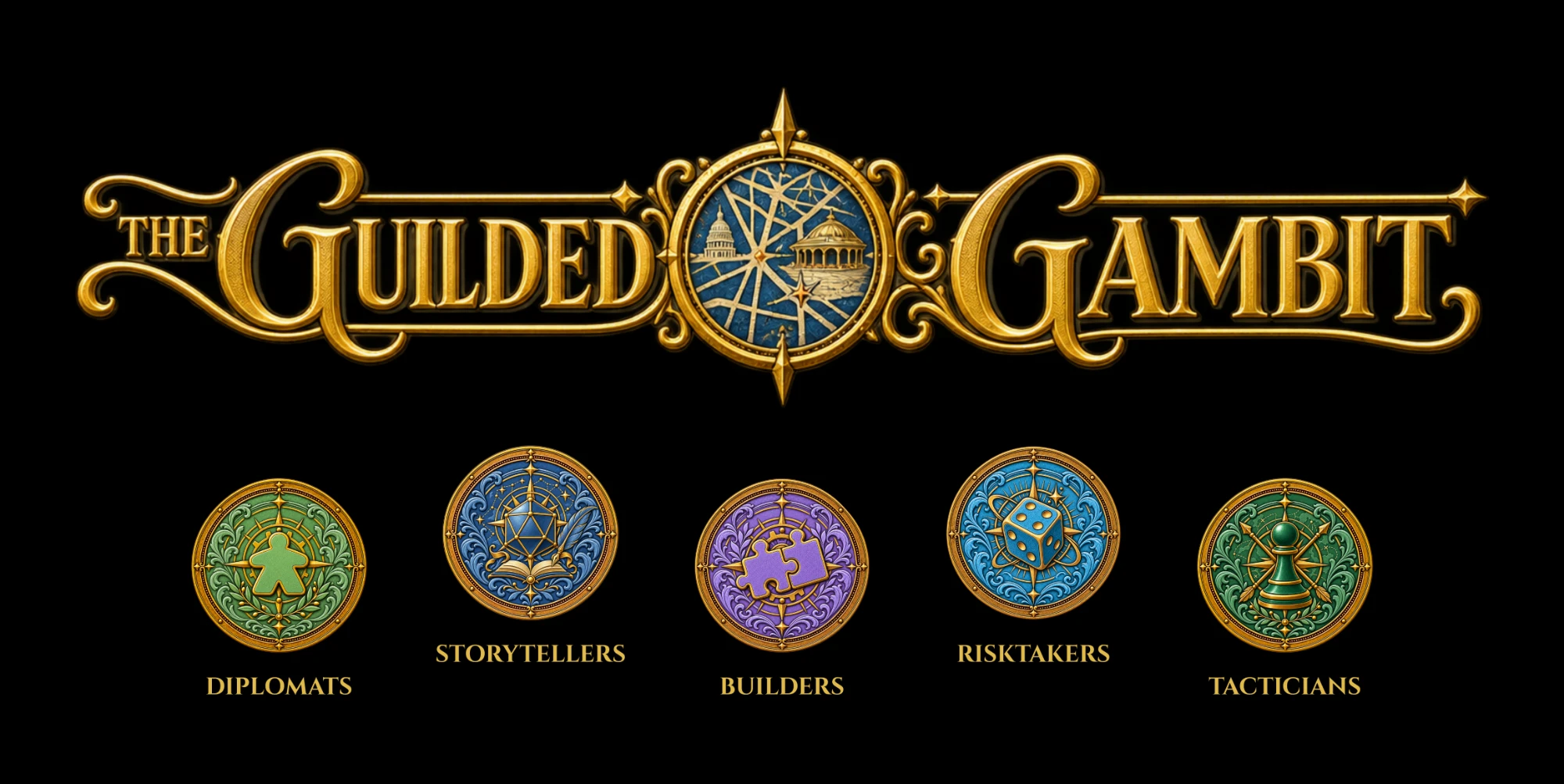
The five guilds, as they appeared on the banner over the North Hall.
The five guilds
10am · Labyrinth Games & Puzzles
Registration decided every team's guild
Before a team was given anything else they huddled around one phone and filled in a form
together. The form was worth nineteen points,
spread across what a team said it liked, how it preferred to play and which games it would pick
up at a loose end. The guild that collected the most of those points was usually the one that
claimed them, though the final sort also had to keep the guilds close to even in size.
Which guild would have claimed you?
This is the form. Fill it in and it will sort you the way it sorted them.
1Spend eight stars
Give more to the play your team loves most. Each star is one point to that
guild.
2Pick a side, five times
No middle option. Each pick is one point.
3Three games you would actually play
Which would your team reach for at a random get-together? Each one is worth two points, and every game on this list belonged to a
guild.
The last step
A final step of the form asked teams to reflect about the people with whom they play:
Who keeps their nerve when there is something to lose?
Who will walk up to strangers and start a conversation?
Who is your maker, good with their hands and quick with a puzzle?
Who thinks a step ahead of everyone else?
Who is your performer, quick with improvisation or strong on imaginative tasks?
The form finished by naming three guilds most interested in them, which helped the sorting
process later.
10:30am · North Hall, Eastern Market
The Hall of Champions
Fifteen banners hung around the walls of the hall. Five games ran on tables in the middle of
the floor, and five guild leaders moved between them watching who was worth recruiting.
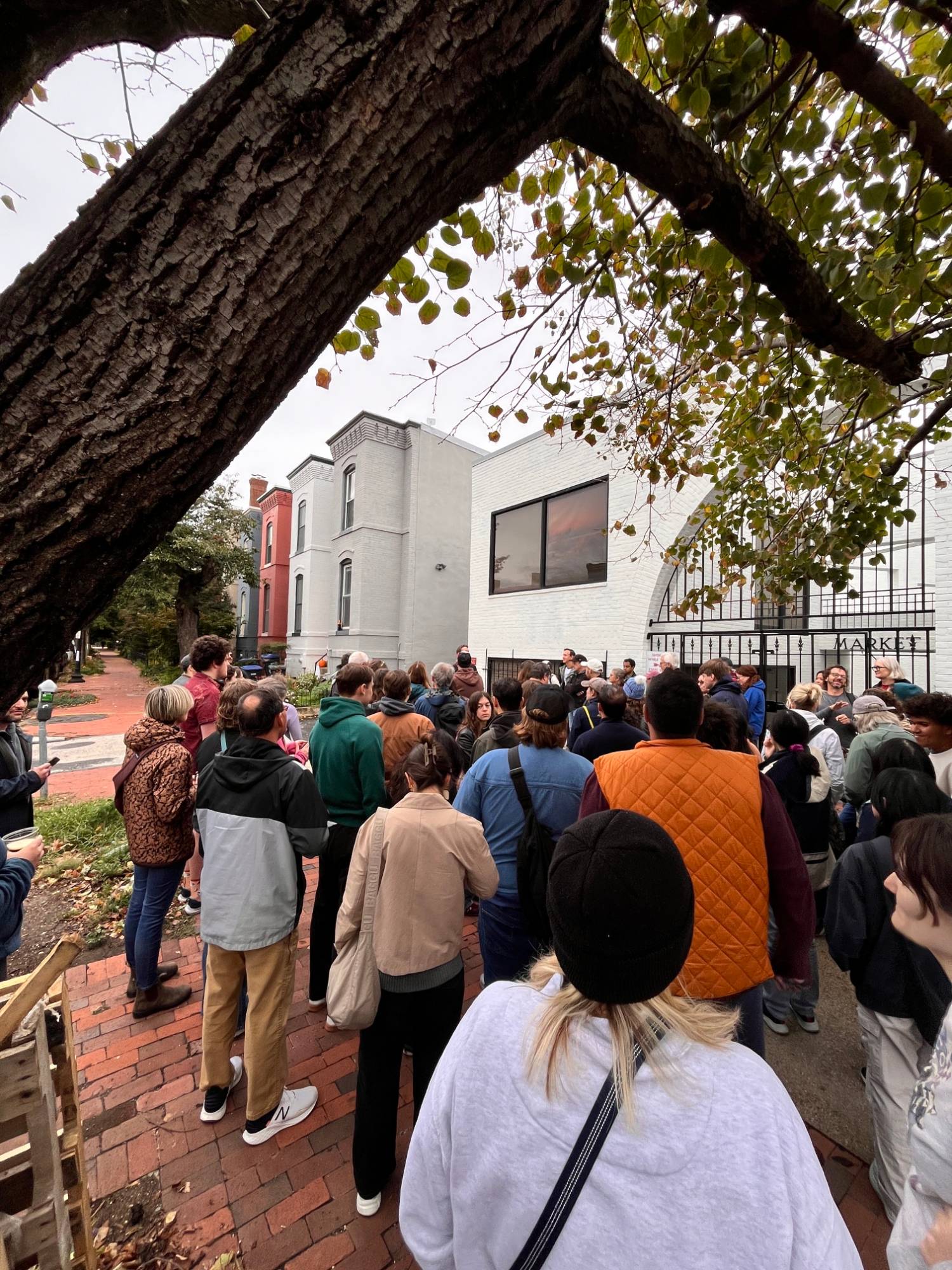
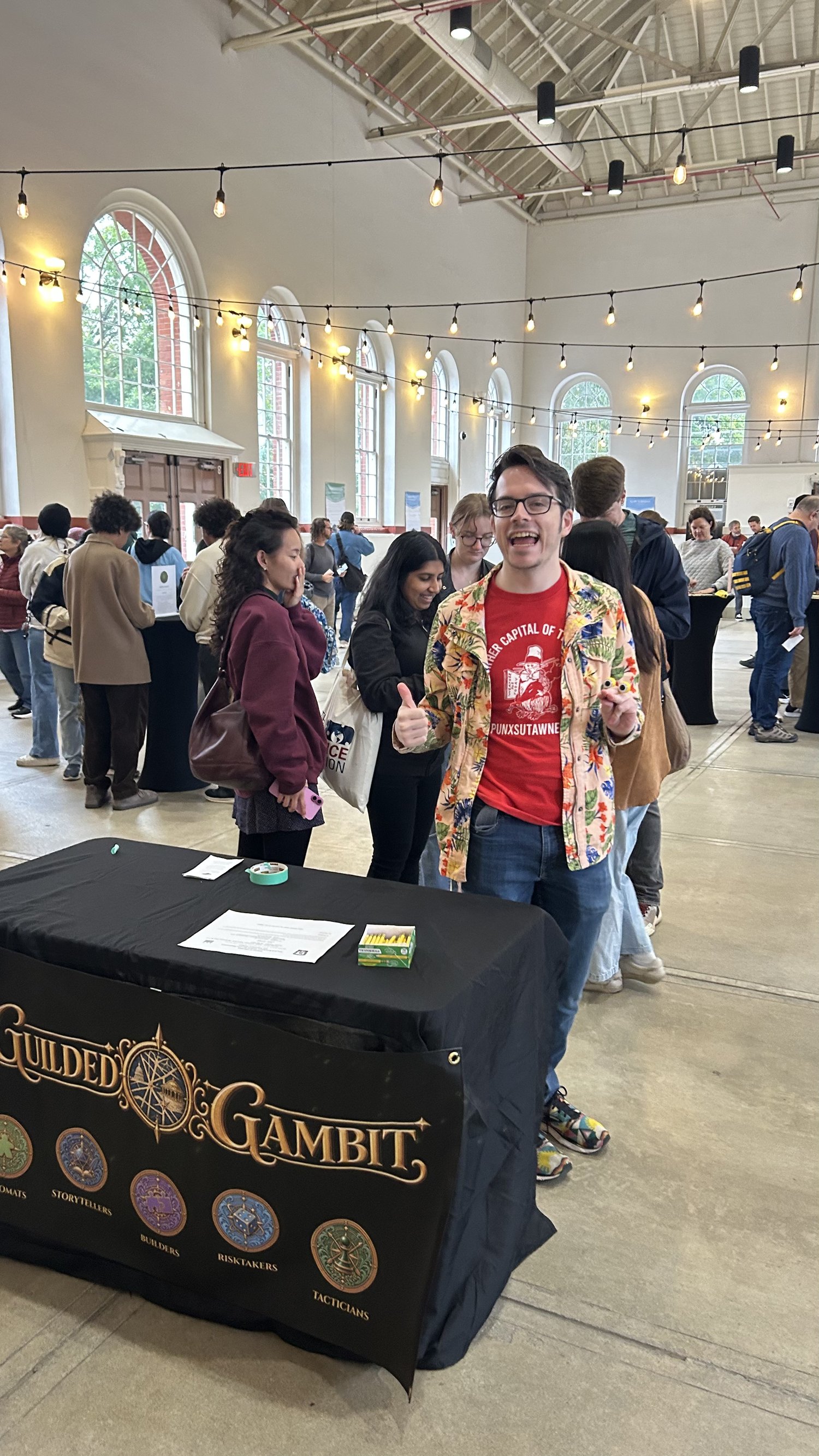
The welcome table, and the hall filling up behind it.
The five games on the floor
One for each guild, chosen to feel like the guild running it and playable in a few minutes by
strangers. Open any of them for the rules sheet that sat on the table.
The one that left something behind
Four of the five games cleared away with the tables. The Storytellers' board did not. One
word per sticky note, added by anybody who walked past, and by the end of the morning the
boards held three stories with no author.
Close to Metro, there lived 13 dogs covered in many colors, holding bananas, and
singing incantations involving monkey.
Far from the lake monster lies our darkest happy land, known to many crusaders, but
unknown to the women.
Once upon a thyme, on Spice Island, my capybara seasoned her dinner with some fresh
thyme and tarragon.
The fifteen banners
Fourteen of the names on these walls were real Ludic Legends. One was an interloper, and naming him to a guild leader got a team recruited. Click any banner to read it full size.
How to solve the banners
Every team was handed a printed list of the fifteen names. Almost every banner spoke up for
somebody else on that list, so the work was to clear the names that were covered and see who
was left over.
One. Annette Zamboni supplies the method
Her banner is not a sentence, it is a grid of words. Read down the four columns and it gives
four instructions at once: every fourth word unlocks clues, scan for context and
listen, I am a past champ, start with the word begin. Read across the rows
instead, and every fourth word spells the last of those back, which confirms the
method.
Two. Scan, and listen
Annette Zamboni's second instruction was the one that mattered: scan for context and
listen. Four banners carried a QR code, and three of them were labelled Local Designer
and led to the work of Gene Koo, Connie Vogelmann and Elizabeth Hargrave, who design real games
a person can go and buy. The fourth sat on Trusty Oddsmith's banner with no label on it at all,
and it played a recording rather than opening a website. That recording held the only
instruction that appeared nowhere in print: cross off any name beginning with X. Xander Jenstone
and Xavier Gerry came off the list.
Three. Compare notes with another team
Xander Jenstone's banner, before it comes off the list, tells teams to compare notes with one
another and says his favorite champions loved to switch places. There were two versions of the printed
list. Put a sheet next to another team's and two names have moved: Jamie Mysteries and
Elizabeth Hargrave. It is the only clue on the walls that cannot be solved alone.
Four. Let the rest vouch for each other
Jamie Mysteries says two fellow champions can be found with weapons from Clue.
William Tallz is holding a candlestick. Plurgle Brimston is holding a wrench.
John Colorman prints in two colors. The red words read I am a real champion.
The gold words read go to posters with metal objects, which is the same candlestick
and the same wrench.
William Tallz points at a nine-letter surname meaning stumpers, which is Mysteries.
Plurgle Brimston says the Class of 2025 took in exactly two new members, which
accounts for Connie Vogelmann and Spinda Wheel.
Georgia Flame explains that her nickname and Gene Koo's combine into MATCHMAKER, and
that one more pair does the same: Ilene S. Usual's BUSINESS and Trusty Oddsmith's MODEL. All
four of them, she says, are former champions.
Xavier Gerry names Annette Zamboni as his best friend.
Five. Count what is left
Twelve of the fifteen are spoken for by somebody else on the wall. Two are struck off by the
recording. That leaves one.
One name on the sheet had nobody speaking for it:
Gary Elbridge, Risktaker, Class of 1925, who loves
pushing boundaries of what anyone thinks is fair or reasonable to try, and who has never
won anything.
That was the answer the guild leaders were waiting for. Turned around, with one vowel
changed, Gary Elbridge is Elbridge Gerry, a real person whose name was misspelled on
purpose so that a guild leader could say it out loud and still deny it.
Remember the name. It comes back twice.
The sorting machine
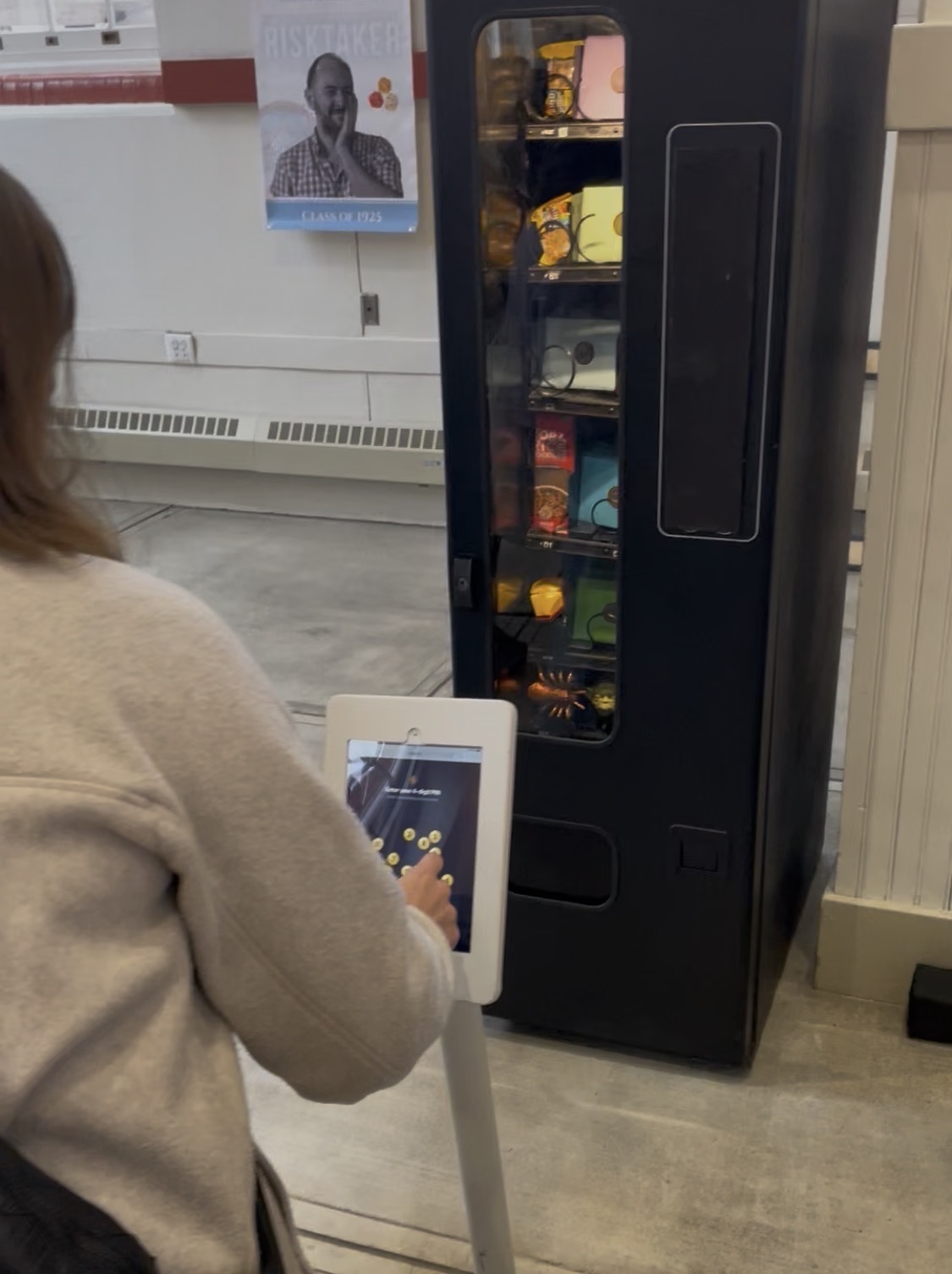
A team that named the interloper correctly visited the guildmaster, who was stationed at a
vending machine near the exit and shared a four-digit PIN. The team keyed it into an iPad and
the machine dropped an envelope into the tray to reveal their guild. That PIN did double duty:
it also served as the team's passcode for the app.
Name the interloper correctly and the guildmaster sent you to the machine, which
read the team's name back and dropped the envelope.
The sort
Twenty-four teams, five guilds
This is where everybody landed. The machine sorted teams one at a time and balanced as it
went, counting teams rather than players, since an even spread of teams is what keeps the games
at a zone fair; player numbers mattered less.
Everyone who played
What dropped into the tray
The envelope
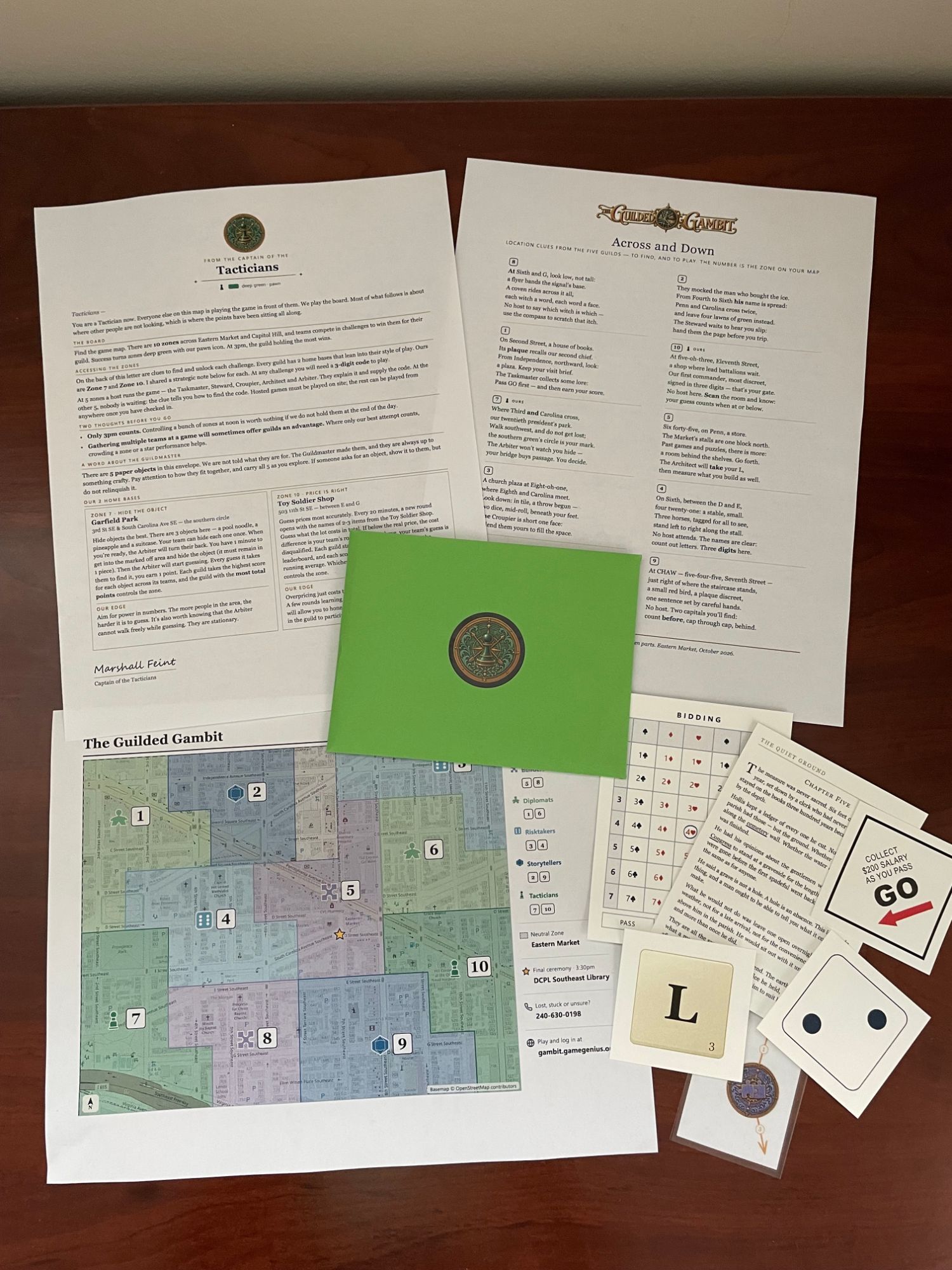
Inside was a letter from the guild captain, a printed battle map, ten clues in verse, a
laminated compass and five small paper objects.
A Tacticians envelope, opened. The captain's letter, the clue sheet, the battle map,
and the five paper objects along the bottom right.
The five objects
Click any of them to expand the design.
Their first job was a toll
The verses gave that away one zone at a time. Five of the ten zones had a host, and each host
wanted to see one of these before handing a code over. The GO square bought a team into the Taskmaster's game. The die finished the
Croupier's throw in the sidewalk. The Architect wanted the letter tile, the Arbiter wanted the
bridge card, and the Steward wanted the page.
Their second job was an address
Each object carried its own number, though none of them said so. The GO square is where a
board begins. The die showed two pips, the letter tile was worth three, the bidding card was the
four of hearts, and the story was Chapter Five. Put them in that order and the first four stop
being objects and start being sounds.
Go to Elbridge. The cemetery.
The fifth object named the cemetery. It was a page from a gravedigger's story about the
gentlemen from Congress and the wall of the ground they lie in, and there is only one
Congressional Cemetery. It sat east of every zone on the battle map, and it was the one place
that mattered which the map did not show.
Any team that had been paying attention in the Hall of Champions already had the name. So the
five scraps did two jobs at once, a toll at five different hosts and an address between them,
and a team could spend the whole afternoon handing them over without noticing the second one.
What nobody had yet was a reason to go there, or anything to do once they arrived. That came
out of the clue sheet.
In your hand
The app
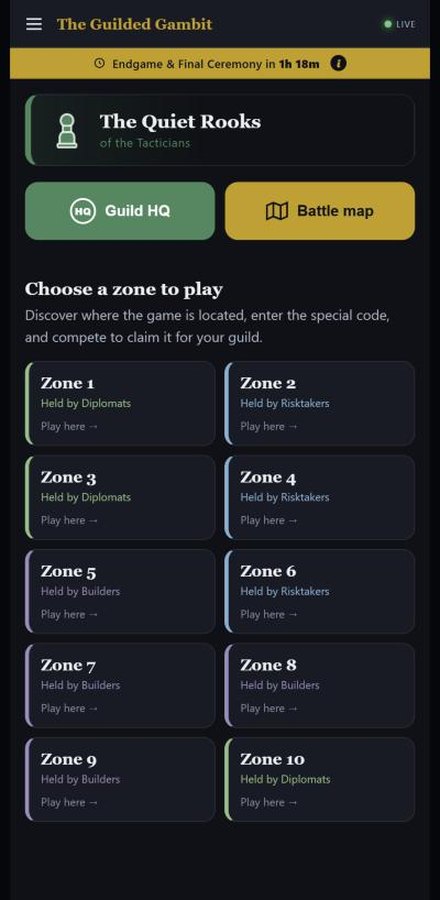
Every zone, every score and every change of hands on the map went through a single page on a
phone. Teams logged in with the name and PIN the guildmaster had given them, and from that
point the app knew which guild they belonged to, which zones they had reached and what each of
those zones owed them.
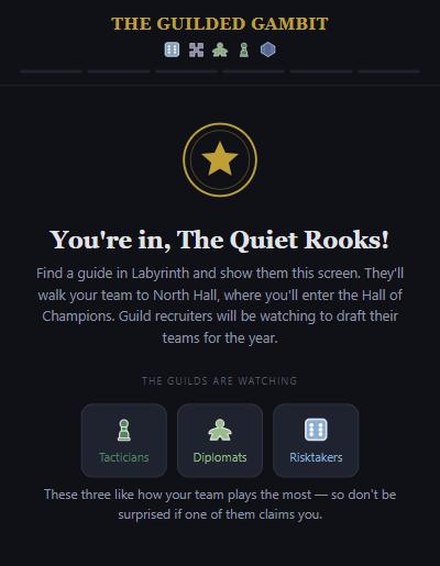
Below is a walk through what a team could open during the day, using a made-up Tacticians team
called The Quiet Rooks.
All ten games are written up in full a little
further on.
11am to 3pm · The field
The ten zones
Each zone was somewhere teams had to travel to and explore. The shape was the same every
time: a verse put them in roughly the right streets, the place itself gave up a three-digit
code, the code opened the game, and the game decided who held the ground. Five zones had a host
who wanted to see one of the paper objects before handing the code over. At the other five
there was nobody to ask, and teams worked it out between themselves.
A zone belonged to whichever guild led its game at that moment, and the map redrew itself as
the lead changed.
Open any zone for the clue, the solution and how it finished.
The eleventh node
The Hidden Hand
The five objects gave teams a place. The ten clue verses gave them the reason. One word in
each verse was printed in bold, and an eleventh sat in the footer of the sheet. Because the
sheet did not list the zones in numerical order, the bold words only resolved when they were
read in the order it printed them.
At his plaque, scan and take the digits seen
before retrospective.
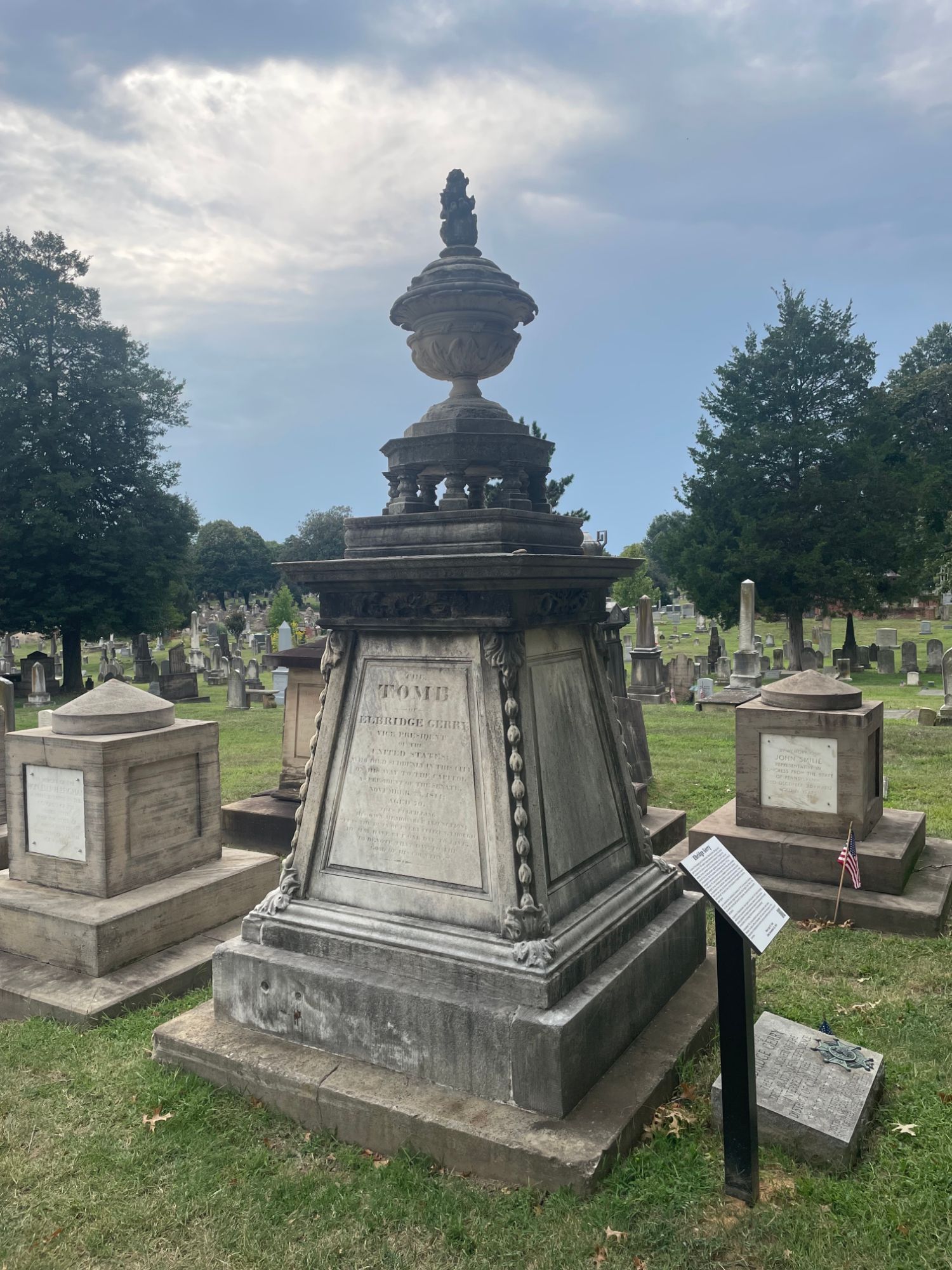
Elbridge Gerry is buried at Congressional Cemetery, east of every zone on the map. He signed the Declaration of Independence, and he is the only
signer buried in Washington.
The man hidden in the Hall of Champions that morning as Gary
Elbridge, and what the QR code beside his plaque opened.
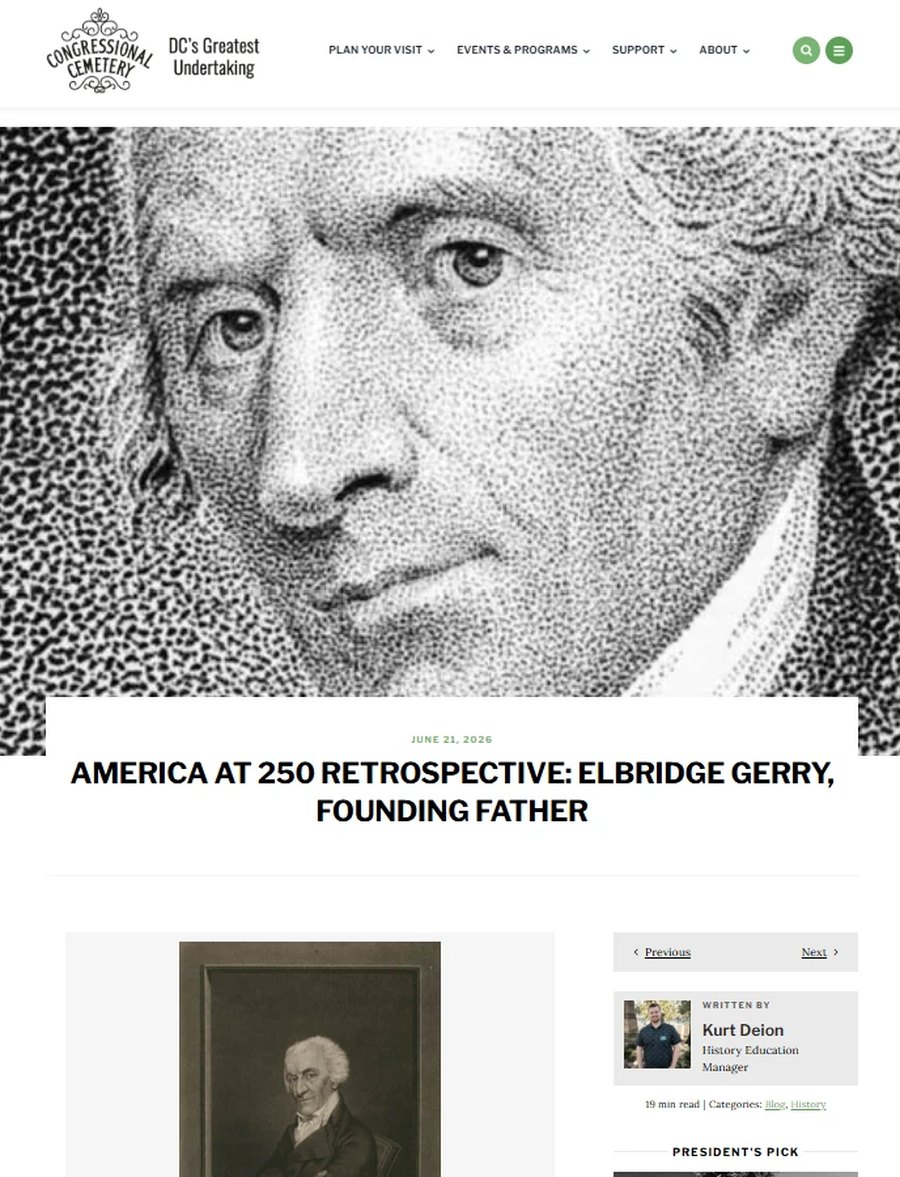
The code at the plaque opened the cemetery’s own retrospective on him, headed
America at 250 Retrospective: Elbridge Gerry, Founding Father. The digits before that
word are 250, and 250 typed into the app unlocked that team’s gerrymander.
Each guild had a different move, and this is the wording a team read on its own phone.
Five teams got there, in this order: Falling Behind, The Spirit Seven, The
Breadwinners, Lud-ites … but we're game, and ATF5000. That order matters later. At the
ceremony the moves played out backwards, last sealed first, which left the team that found the
grave earliest with the final word on the map.
10am to 3pm
The day, hour by hour
The app recorded the whole board once an hour. What follows is that record, on the same map the players had in
their pockets. Press play to watch the day
run, or pick an hour. Zone 4 changed hands four times.
3pm to 4pm · DCPL Southeast Library
The ceremony
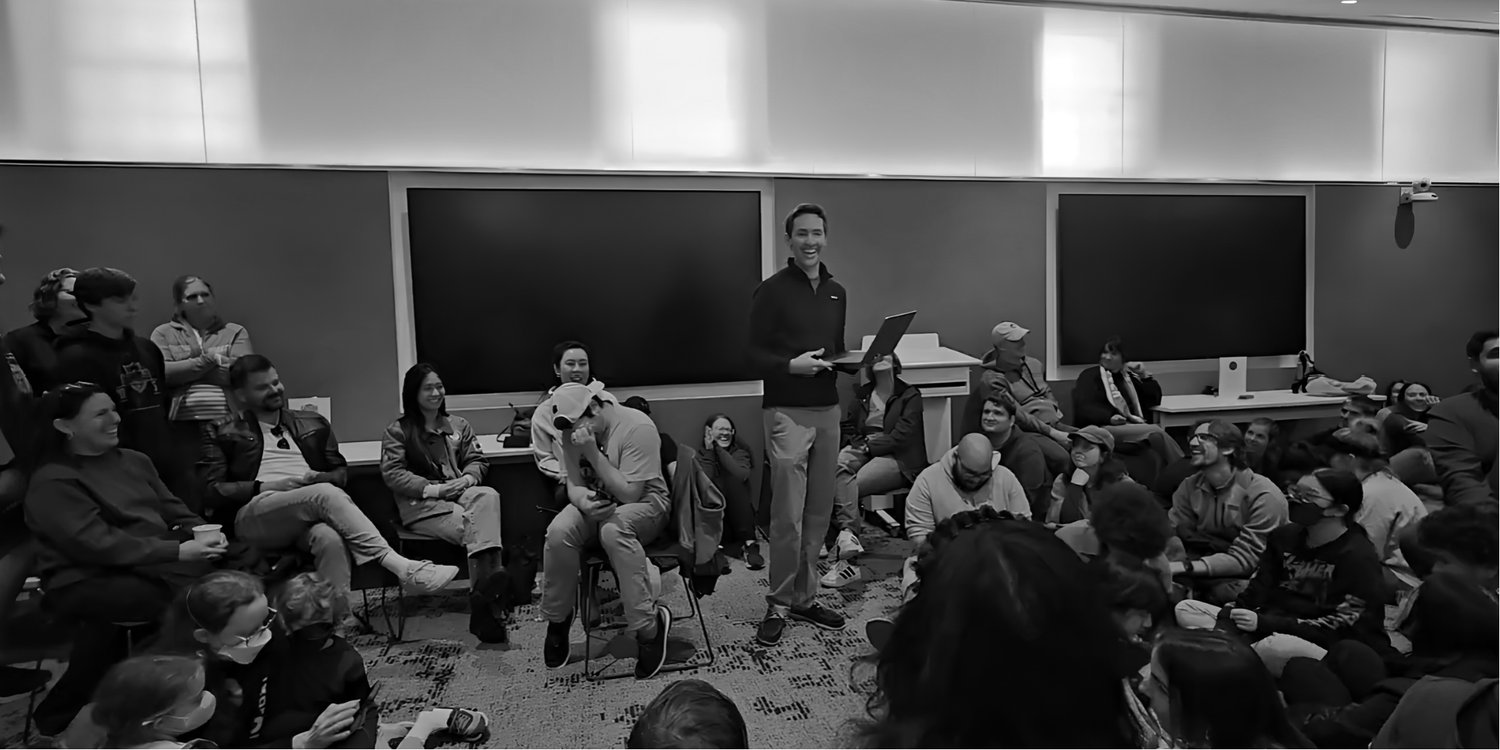
At three o'clock the games closed and the afternoon's scoring stopped. Coming to the ceremony was optional and not everybody came. Two things on the map were still unsettled when they sat down.
The room, at the close of the day.
Extra time on the eleventh node
The Hidden Hand stayed open for a few minutes after play ended, so that teams who had cracked
the bold-word instruction but could not get out to Congressional Cemetery and back in time
could still claim their move. Only one team had sealed one during play. The other four did it
in that window.
The last vote
Zone 9 was the haiku zone, the only one on the map that speed and luck could not win. Teams
who found the plaque outside CHAW spent part of the afternoon writing three lines on their
phones about what games and play meant to them, and none of it was scored at the time. Each
guild then voted for its own best poem, which produced five finalists and no winner.
So Zone 9 was still unclaimed when the room sat down. The five finalists were read aloud
without naming the guilds that wrote them, and everybody voted.
The gambit
Five gerrymanders
Then we opened the five sealed moves and played them one at a time. Each one landed on the
board the last one had left behind. Every one of them is a gerrymander: it changes who owns ground
without anybody playing for it. What started as the Risktakers ending the day in the lead
finished with the Builders taking the Guilded Gambit.
After all the map changes the Builders gained two zones, which was enough to tip the final
result toward them. Their own move echoed a Risktakers re-roll of Zone 9, and the re-roll came
up Builders. The second zone came from the Storytellers, whose Plot Twist flipped Zone 7 and
moved the Builders from the bottom of it to the top. The Storytellers ended the day with
nothing.
The Breadwinners’ Deal appeared to do nothing at all. Zone 2 and Zone 3 were both led by the
Risktakers, so swapping them changed no colors on the map, but it swapped the order underneath
and that put the Diplomats second on Zone 3. One move later the Spirit Seven knocked the
Risktakers off Zone 3 and the Diplomats took it. The Spirit Seven are Tacticians, and before the
Deal second place had been theirs.
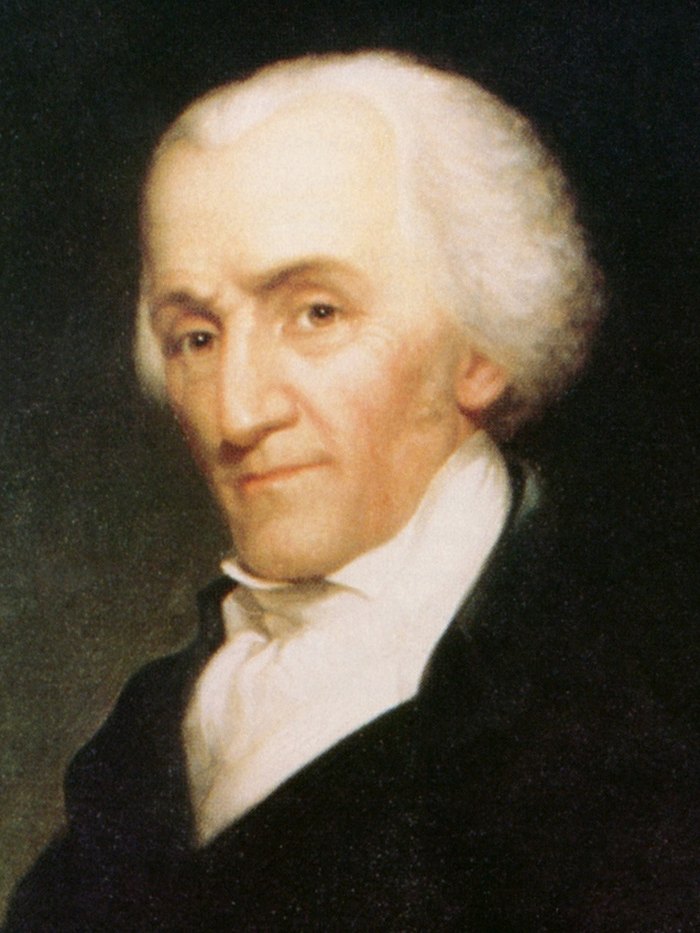
Elbridge Gerry signed a bill in 1812 and gave his name to this.
He was governor of Massachusetts, and the law he signed redrew the state senate districts
so that his party would keep them. One district bent around the top of the state in a shape
a Boston newspaper thought looked like a salamander, and Gerry plus salamander made
gerrymander.
It worked, which is the part worth sitting with. That autumn the Federalists took roughly
fifty-one percent of the senate vote across Massachusetts and came away with eleven of the
forty seats. More people voted for them and they lost the chamber anyway. Gerry lost his own
job in the same election, the Federalists swept back a year later and repealed the districts
outright, and the word stuck to him forever.
None of it was illegal. The new map stuck and the results counted. That was also true of
the five moves in the Guilded Gambit. Yet in both cases, the final outcome left an uneasy
feeling that the true winner may not have been worthy. This sparked some questions the
whole day was built around:
If rules let the previous winner redefine the playing field, where is the line between
fair and unfair?
What encourages players to want to keep playing?
A healthy debate or high voter turnout suggests a system is alive with energy, while
increasing apathy toward a system often marks the death of that system. We believe games
can help make these abstract conversations more visible and tangible. As the old adage
goes, “seeing is believing.”
Honors
Who covered the most ground
Finding a zone meant solving its verse, getting to the right place and entering the code.
Across the day teams did that 191 times, an average of 8.3 of the 10 zones each.
Counting the Hidden Hand as an eleventh, these are the teams that reached ten or more.
Three teams went eleven for eleven. Six more reached ten.
Some of the most effective performers
The list above counts ground covered. This one is about what happened once a team got there:
how high they placed in the games they played, and whether they found the eleventh node.
Every zone above has its own board of top performers.
One more thing
What players said
We asked six questions after the day. The survey closed on November 6 with ten
responses, and every one of them is published in full.
1. How did you find the format of this year’s game?
2. What was your favorite part?
3. What was your least favorite part?
4. Same neighborhood every year, or move it around?
5. How much does it matter that the theme carries a real message, rather than
being just a good game?
The web app that ran the day was built with AI assistance over three months. We measured what
that used in electricity, water and carbon, what we did in response, and how anyone can run the
same numbers on their own project.